How to buy a massage chair without regret
If you want the short route, take one of the three chairs below and stop reading. If you want to know why those three and not the other twelve, the order of decisions that follows is the one we use, and it keeps the money pointed at the things that decide whether you still like the chair in year two.
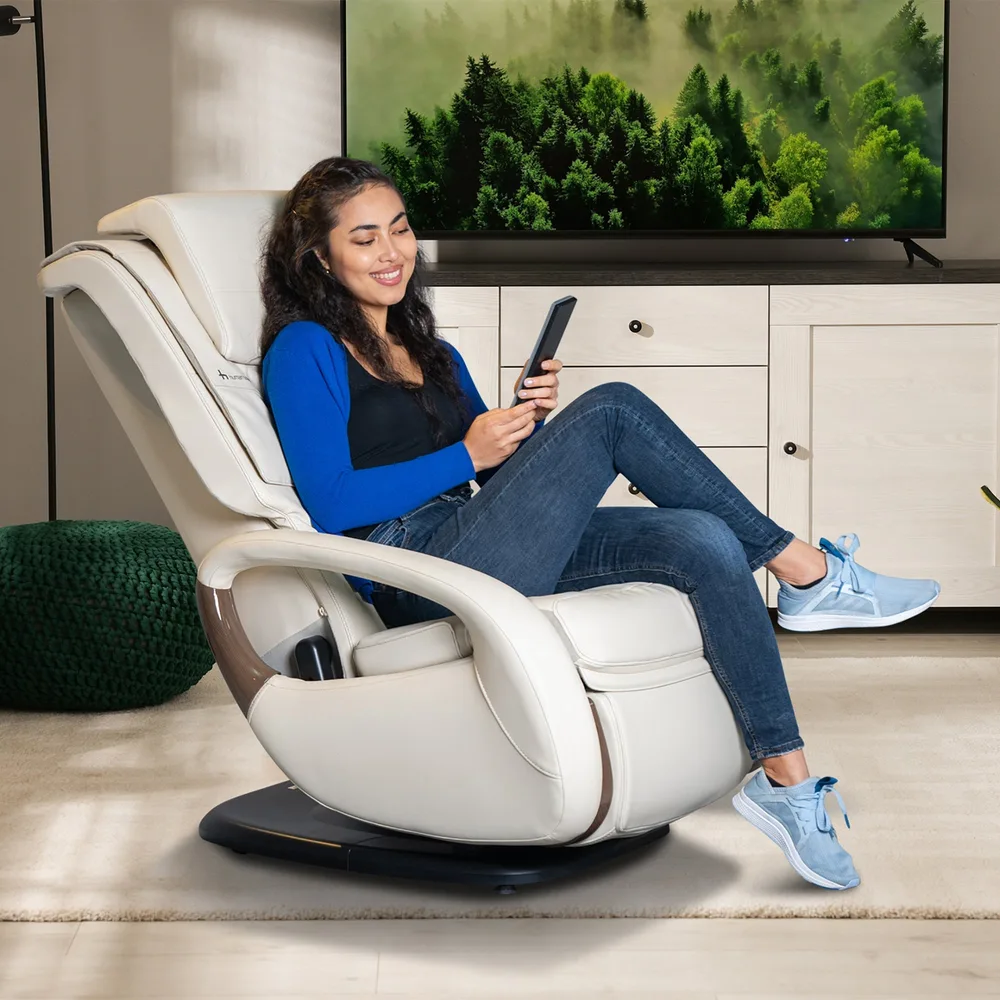
The short route: three chairs that already cleared the checks
Every chair here carries our Buy, which means we found no disqualifier for its intended user. They sit at the bottom, the middle and the top of the market, so pick the band you are shopping and most of the decision is already made.
 Real Relax Favor-034.5/5BuyComfort District ratingBudget tier, under $1,000. Our pick for the most hardware per dollar at the bottom of the market, inside a fit envelope its maker publishes. See price at Amazon
 Kahuna LM-6800T5/5BuyComfort District ratingMid tier, $1,000 to $2,500. Our pick for the strongest grade sheet on our ledger, on two years of parts, labour and on-site service, while the closeout stock lasts. See price at Amazon
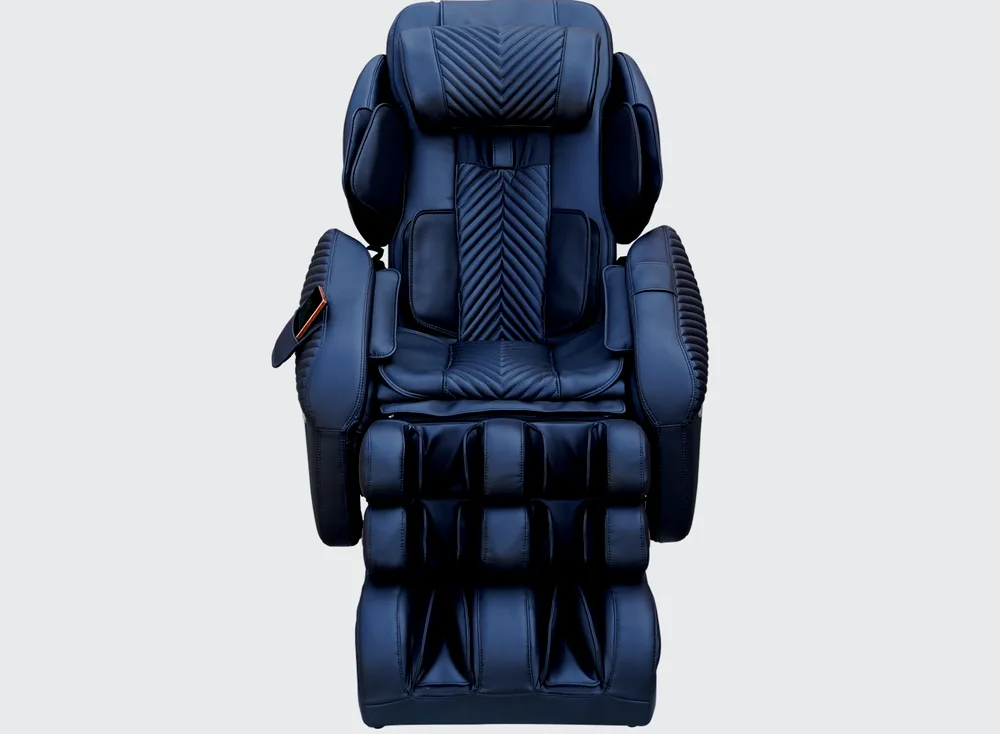 Luraco i9 Max Plus5/5BuyComfort District ratingFlagship tier, $10,000 and up. Our pick for the widest documented fit ceiling in the aisle, with a US factory and the longest warranty structure we have read. See price at Amazon
Start with fit, not features
Rollers ride a fixed rail, so a body outside the chair's height envelope gets massaged in the wrong places: at the neck when you are short for it, mid-back when you are tall. Most standard chairs fit roughly 5'0" to 6'2", and taller users need models rated for them explicitly. Weight limits deserve the same respect, because official caps in the budget tiers cluster between 200 and 240 pounds, and exceeding one strains the frame, wears the track early, and can void the warranty. Read the technical sheet rather than the headline, since the two disagree more often than they should.
Then pick the track
The rail shape decides coverage and recline. An S-track contours the spine and stops at the lower back, an L-track continues under the seat to the glutes but cannot recline flat, and an SL-track does both jobs and has become the sensible default. Flagship chairs add hybrid rails that manage full recline with L-length coverage. The trade-offs run deeper than one paragraph, so we unpacked them in the track guide.
Then the rollers
Two numbers matter less than retailers imply. The jump from 2D to 3D adds adjustable depth and genuinely changes the feel; the jump from 3D to 4D automates speed changes the remote already offered; everything above that is branding. Budget the 3D upgrade when you can, and read the roller decoder before a D-number adds a digit to your price.
What each budget actually buys
Under about $1,500 you get 2D mechanisms, maybe lumbar heat, and visible compromises in fit range and warranty; the good ones are honest workhorses, and we ranked them in the under-$1,000 roundup. From $1,500 to $3,500 the sweet spot opens: real SL tracks, body scan, heat, and a first taste of 3D, covered in the under-$2,500 rankings. Above $3,500 build quality steps up, with zero gravity, full-body air, and foot rollers becoming standard rather than selling points. Past $6,000 you are buying refinement: hybrid tracks, sensor feedback, real leather, wide fit envelopes, and in-home service that shows up.
Plan the delivery before the purchase
Standard shipping is curbside, which means a crate around 300 to 350 pounds at the end of your driveway and assembly as your problem. White glove service brings it inside, up to two flights, assembles and tests it, and hauls the packaging away for roughly $149 to $300 where it is not bundled. Premium chairs effectively require it. Before ordering anything, measure the boxed dimensions through every door, hallway, elevator, and stair turn on the route, then measure the room: about 3 by 5 feet upright, 3 by 6.5 feet reclined, plus 2 to 6 inches of wall clearance for space-saver designs and 10 to 18 for traditional ones.
Read the warranty like it will matter
Because someday it will. The honest floor is 2 years of parts and 1 year of labor; budget chairs commonly ship with 1-year terms whatever the marketing implies, and 3-year claims often cover parts only. In-home service beats ship-back service by exactly the cost of freighting a 300-pound machine. Check the exclusions for commercial use, ask how roller and motor repairs actually get handled, and watch for oddities like usage-hour caps in the fine print.
The seven ways first buyers get hurt
The first mistake is buying on looks and price instead of fit. Ignoring the weight cap comes second, followed closely by trusting the headline spec over the technical sheet. Chasing D-numbers past the point of meaning wastes the next group's money, while others skip measuring the delivery path and the reclined footprint until the crate is wedged in a stairwell. Restocking fees and return freight surprise everyone who priced neither before ordering. And the last mistake walks in expecting a medical device, when what arrived is a very good relaxation machine that should be judged as one.
The order that works
Confirm fit from the technical sheet, choose the track shape, decide whether 3D depth is in budget, then shop your price band for warranty and delivery terms rather than feature count. A chair that fits your body with a boring spec sheet beats a spec monster that massages your shoulder blades and calls it a neck program.
First-chair questions, answered once
How much should a first massage chair cost?
Most first-time buyers land well between $2,000 and $3,500, where real tracks, heat, and decent warranties become standard. Under $1,000 buys a legitimate relaxation machine with visible compromises, and above $6,000 you are paying for refinement, coverage, and service depth.
How much space does a massage chair need?
Plan on roughly 3 by 5 feet upright and 3 by 6.5 feet fully reclined, plus wall clearance: 2 to 6 inches for space-saver designs and 10 to 18 inches or more for traditional recliners. Measure the reclined footprint, not the showroom pose.
What is white glove delivery for a massage chair?
A two-person crew brings the chair inside, typically up to two flights of stairs, assembles it, tests it, and removes the packaging. Expect roughly $149 to $300 where it is not bundled free. Standard curbside delivery leaves a 300-pound crate at your driveway.
Do massage chair weight limits really matter?
Yes, and more than most specs. Exceeding the rated capacity strains the frame and the roller track, wears the mechanism early, and can void the warranty. Check the technical sheet, since official limits in the budget tiers cluster around 200 to 240 pounds.
Keep walking the aisle
Two references settle most of what is left. Every fit figure we could verify tells you which chairs are candidates at all, and what breaks and who fixes it tells you what the warranty behind each one actually grants.
Money is one way to narrow this. If the deciding factor is a need rather than a budget, see our ranked picks by need.